
In game development, QA has always been one of the most time-consuming parts of production, and often one of the easiest to underestimate. But the cost of finding issues too late can be significant.
Cyberpunk 2077 remains one of the clearest examples. The game launched with serious bugs and performance issues, triggering refund waves, a temporary removal from the PlayStation Store, more than $50 million in refunds and launch-related costs, and a roughly 40% drop in CD Projekt Red’s share price [1].
In 2026, when people talk about AI in games, the discussion often turns to AI-generated stories or art assets. But AI is also being applied in QA, helping developers detect problems earlier in the development process.
Game QA: A problem of time, data, and test coverage
Matthew Tighe has spent almost a decade in game porting, bringing titles such as Cult of the Lamb and Art of Rally to consoles. From that experience, he observed that many recurring problems in games were not simply caused by technical complexity. More often, they came from compressed timelines, incomplete information, and decisions made too late in production [2].
One common issue is uneven test coverage. Tutorials and early-game sections are usually tested heavily because they are the parts shown to publishers, press, and players first. Later sections, however, often receive less attention, meaning serious bugs may only appear near launch, when fixing them becomes much more expensive [2].
The solution Tighe points to is not simply hiring more QA staff. It is about running QA continuously throughout development and automating the parts of testing that humans cannot realistically cover under production deadlines.
Gameworks: Recording and analysing every time a developer runs the game
Tighe took the automated testing system developed during his game porting work and rebuilt it as Gameworks, an AI-powered QA platform designed to run throughout the production process [2].
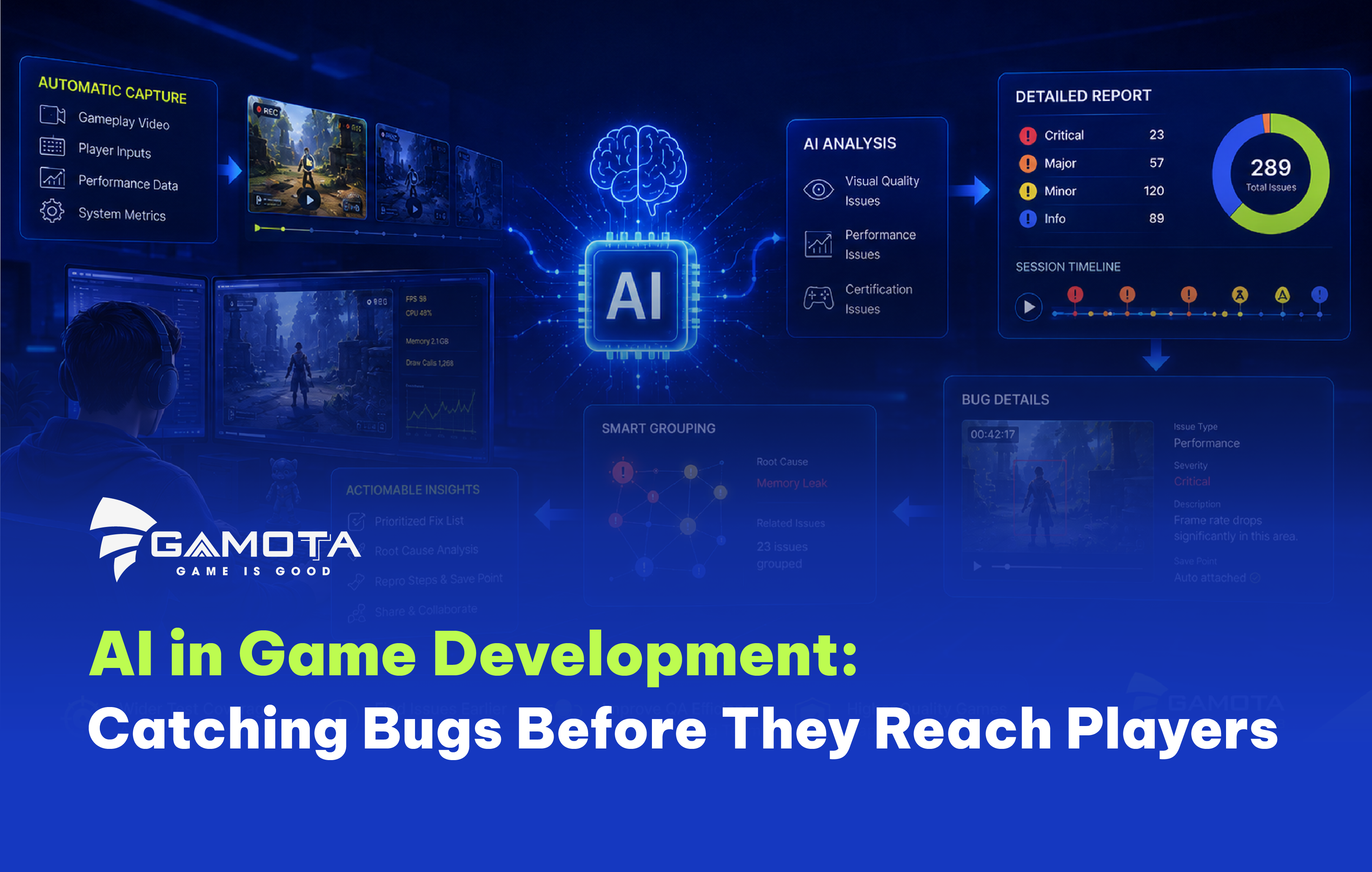
Every time a developer runs the game, Gameworks records gameplay video, player inputs, and various technical metrics.
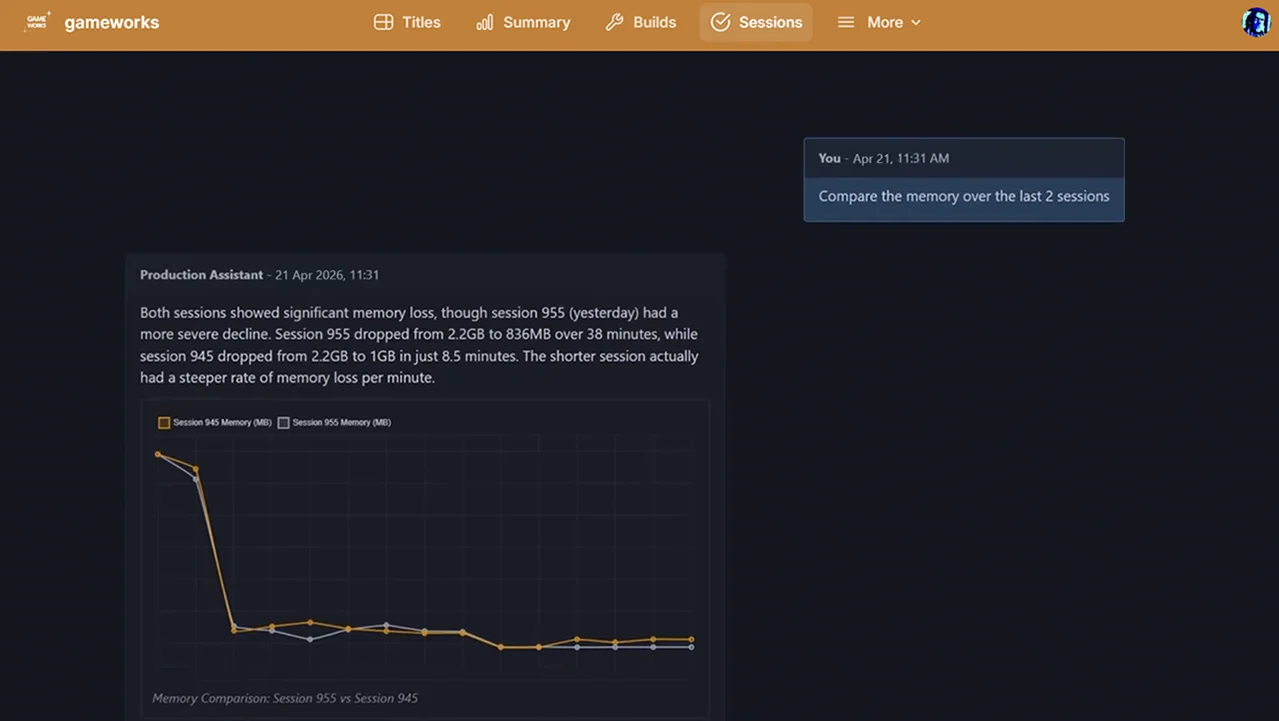
Gameworks compares session data to detect memory and performance issues.
Source: Gameworks
The system then processes that data through a combination of LLMs, custom models, computer vision models, heuristics, and AI models to identify issues across three main areas [2]:
- Visual quality issues: incorrect textures, abnormal lighting, and visual artifacts
- Performance issues: frame-rate drops, resolution dips, and abnormal memory usage
- Certification issues: incorrect terminology for joypads or controller buttons, such as using the wrong platform-specific button names
The output is an automated report that highlights where issues occur. QA team members can also clip a specific part of a video timeline, create an issue from that clip, and attach the nearest save point. This allows another team member to relaunch the game close to the same point and reproduce the bug more quickly [2].
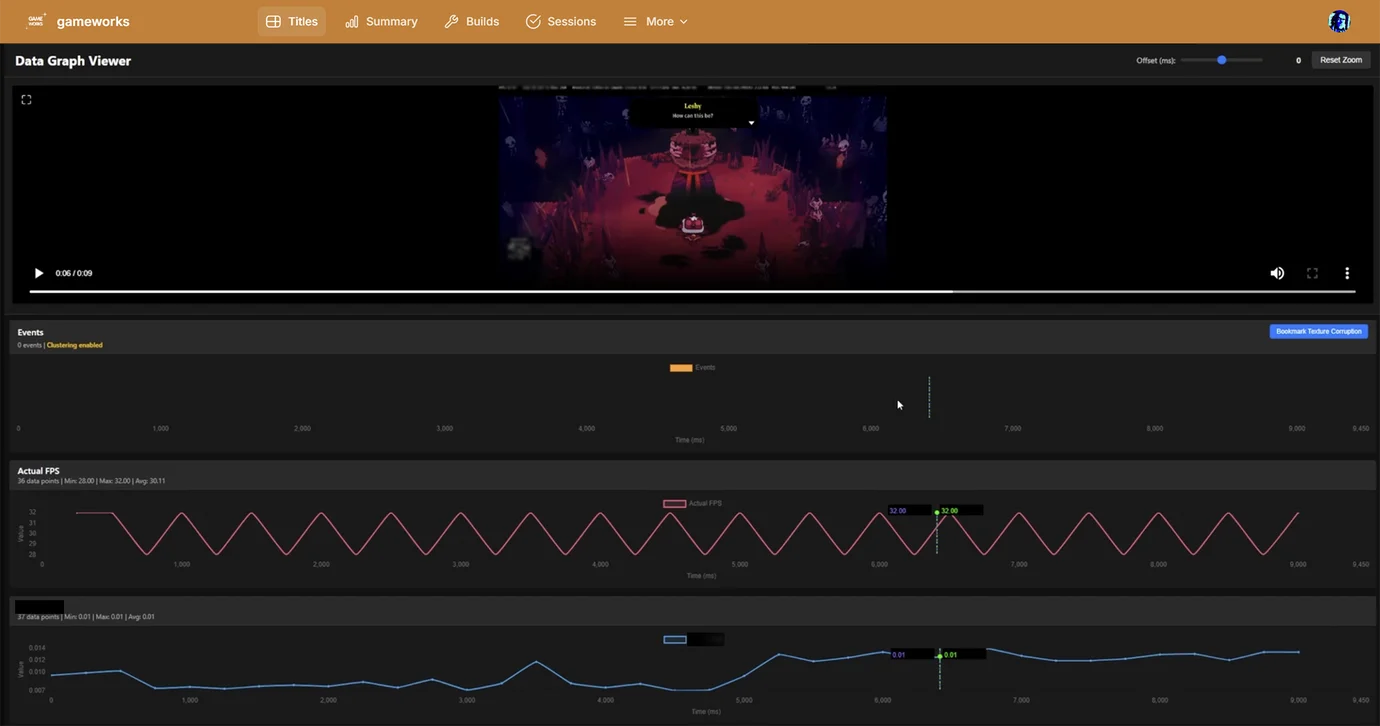
Gameworks captures video of the game alongside performance data for review.
Source: Gameworks
Another feature under development is the ability to identify when multiple bugs share the same root cause, instead of generating a long list of duplicate issues. An LLM processes the overall session data and groups related problems in a way that mirrors how an experienced QA tester would classify them [2].
PerfCop: Answering why the game is slowing down
If Gameworks helps answer “what is wrong with the game?”, PerfCop (Performance Copilot) focuses on a deeper question: where is the performance problem, and which issue should developers fix first?
Designed for Unreal Engine, PerfCop takes raw performance data and trace files, then applies deep statistical analysis to identify abnormal execution patterns, isolate the most impactful issues, and break them down to the function or scope level [2]. Instead of manually digging through trace data, developers can narrow the investigation and prioritise the issues that matter most.
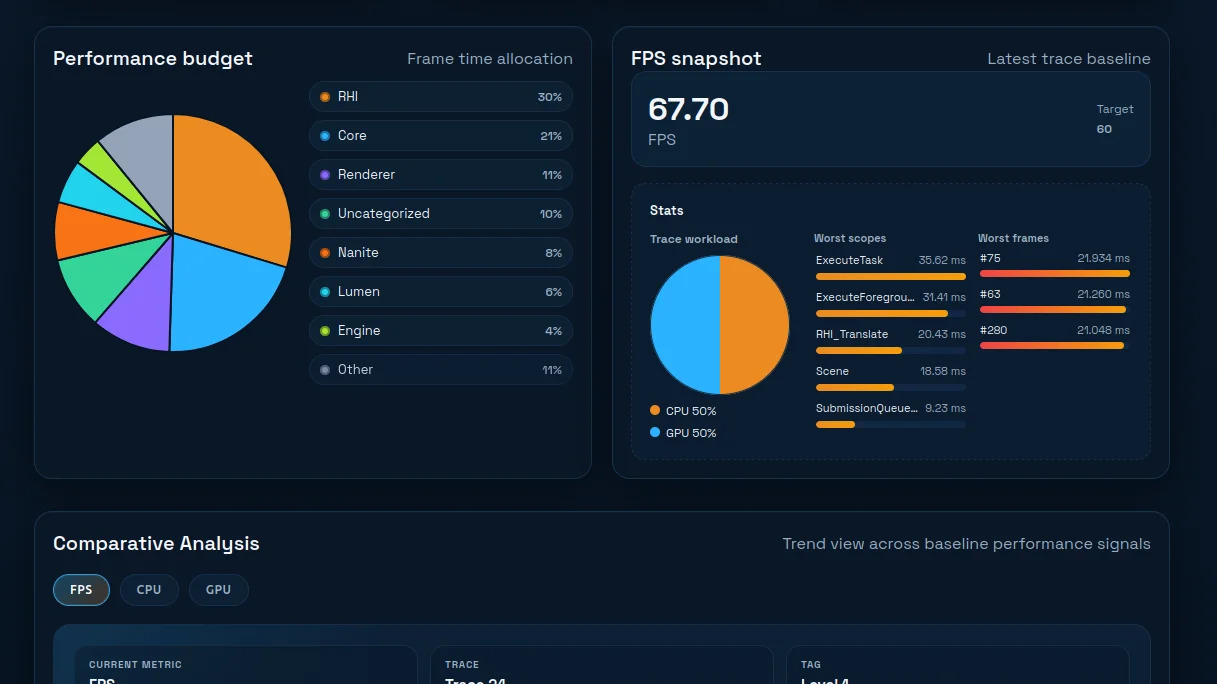
PerfCop highlights FPS, frame time allocation, and performance bottlenecks.
Source: PerfCop
The generative AI layer comes at the end of the process. According to PerfCop’s co-founder Ken Noland, the AI communicates structured findings in a way that accelerates debugging and decision-making, while the core analysis remains based on deterministic statistical methods [2].
Industry-wide: AI in game development is no longer just for large studios
Gameworks and PerfCop are part of a broader shift: AI-assisted QA is gradually moving into game production workflows in a more practical way.
According to Spherical Insights, the global game testing outsourcing market was valued at around $0.85 billion in 2025 and is projected to reach $2.27 billion by 2035 [3]. This demand is not driven by excitement around AI alone, but by a practical economic pressure: bugs found late in the development cycle are significantly more expensive to fix than bugs detected early.
Major companies are also moving in this direction. Square Enix has announced plans to automate 70% of its QA and debugging processes with generative AI by 2027 [4]. Razer introduced Razer QA Companion in May 2025, an AI-powered QA tool built on Amazon Bedrock and designed to detect bugs, support bug reporting, and integrate into game development workflows [5].
Autonomous QA agents are also emerging as a practical direction, with tools that can simulate a wide range of gameplay scenarios, identify bugs earlier, and help teams prioritise the most critical issues [1]. Sauce Labs cites Electronic Arts research indicating that 60% of development processes could benefit from AI, with potential efficiency improvements of up to 30% [6].
AI in Vietnam’s game development landscape
Vietnam currently has around 35,000 game developers, with a strong focus on mobile. Around 70% of Vietnamese studios are targeting international markets [7]. In 2024, games developed in Vietnam achieved 6.7 billion downloads globally, the highest of any country that year, surpassing China to become the world’s top mobile game exporter [8].
At the same time, many Vietnamese studios remain small or mid-sized, with lean QA teams and intense production deadlines. This is exactly the kind of environment where tools like Gameworks could be valuable: expanding QA coverage without requiring studios to significantly scale up their testing teams.
Gamota, one of Vietnam’s top three mobile game publishers with more than 12 years of experience [9], is also closely watching these shifts. With Gabros Studio, its in-house development unit established in 2023 and focused on games for both domestic and international markets [10], AI in QA is no longer just an industry trend to observe from the outside. It is becoming a practical direction to consider within the game development process.
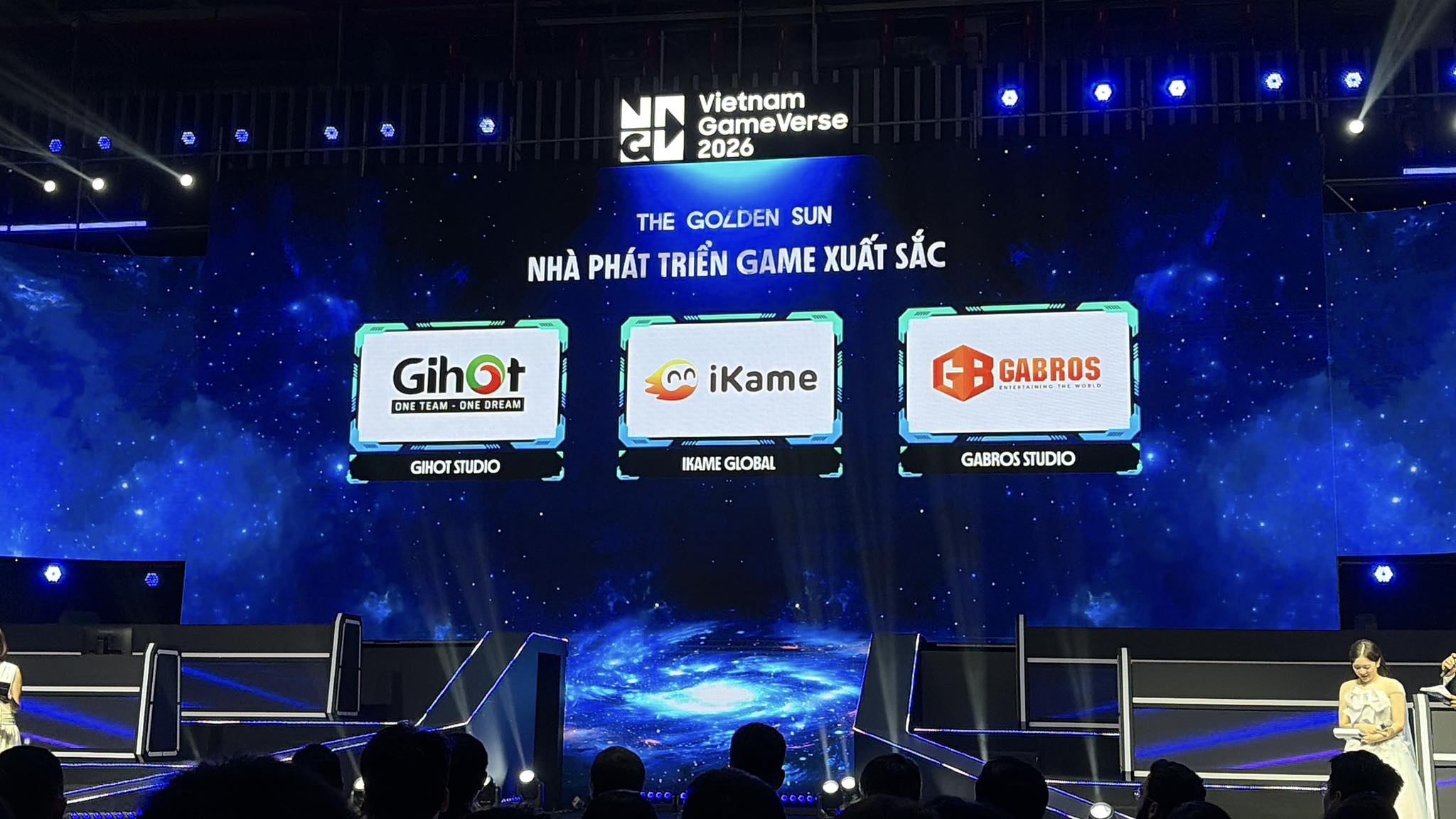
Gabros Studio was named among the Top 3 Outstanding Game Developers at Vietnam Game Awards 2026.
Source: Gamota
AI does not replace game makers. It takes over the work that is easy to miss.
Both Gameworks and PerfCop were built by people who understand game production from the inside. That is reflected in how these tools are positioned: not as replacements for developers or QA testers, but as systems that handle repetitive, time-consuming, and easy-to-miss tasks, so that teams can focus on what matters most.
The industry is entering a stage where quality needs to be built in from the start of development, not only checked at the end of a sprint. Studios that understand this shift earlier will have a clearer advantage in an increasingly competitive market.
References
[1] Third Point Ventures. AI Impact on Gaming and Media Tooling.
https://www.thirdpointventures.com/currents/AI-impact-on-gaming-and-media-tooling/
[2] Lewis Packwood. Tools to tell if your game is broken. GamesIndustry.biz, April 2026.
https://www.gamesindustry.biz/tools-to-tell-if-your-game-is-broken
[3] Spherical Insights. Game Testing Outsourcing Market Size, Share Report 2035.
https://www.sphericalinsights.com/reports/game-testing-outsourcing-market
[4] Uverse Digital. AI in Game Development: How Studios Automate QA, November 2025.
https://uversedigital.com/blog/ai-in-game-development-next-gen-qa/
[5] Razer Newsroom. Razer Is Bringing Revolutionary AI Game Developer Tools on Amazon Web Services, May 2025.
https://www.razer.com/newsroom/company-news/razer-is-bringing-revolutionary-ai-game-developer-tools-on-amazon-web-services/
[6] Sauce Labs. How AI is Helping End the Developer Crunch, February 2026.
https://saucelabs.com/resources/blog/from-developer-crunch-to-synthetic-players-ai-is-changing-game-testing
[7] Gamota Lab. Vietnam Game Industry to the World’s Game Production Hub, December 2024.
https://gamota.com/en_GB/gamota-lab/vietnam-game-industry-to-the-worlds-game-production-hub/
[8] Mobidictum. Vietnam officially surpasses China to become the world’s top exporter of mobile games, August 2025.
https://mobidictum.com/vietnam-officially-surpasses-china-to-become-the-worlds-top-exporter-of-mobile-games/
[9] Gamota. About Us.
https://gamota.com/en_GB/about-us/
[10] VnExpress. Gamota “thắng lớn” tại Vietnam GameVerse 2026, May 2026.
https://vnexpress.net/gamota-thang-lon-tai-vietnam-gameverse-2026-5075037.html