
With approximately 54 million gamers and estimated mobile gaming revenue of USD 825 million in 2025, Vietnam remains an attractive market for international game developers and publishers.
However, market size alone does not fully explain how players interact with games. A title may attract millions of downloads but struggle to convert users into paying players. Conversely, games with smaller audiences can still generate significant commercial value through strong long-term engagement.
According to Gamota’s Vietnam Mobile Gaming Year-in-Review 2025, the market is shifting from volume-driven growth toward long-term player value creation.
For international publishers, understanding Vietnamese mobile gamer behavior means looking beyond genre preferences to identify what motivates players to try a game, keep playing, spend money, and decide whether a title is worth their time.
1. Downloads Do Not Equal Spending
Players may try a new game out of curiosity, interest in its gameplay, or a desire for short-term entertainment. However, the motivations behind downloading a game and spending money within it are not necessarily the same.
According to AppMagic data analyzed in Gamota’s report, only 12 of the Top 50 games by downloads also appeared in the Top 50 by revenue in Vietnam in 2025.
While genres such as Sandbox and Block Puzzle attract large download volumes, tracked in-app purchase (IAP) revenue is more concentrated in 4X Strategy, Battle Royale, and MOBA.
This gap suggests that attracting players is not enough to predict monetization performance. An accessible game may generate significant installation volume without necessarily having gameplay and monetization systems that effectively convert users into paying players.
For publishers, downloads should be evaluated alongside retention, payer conversion rates, and lifetime value (LTV) rather than treated as an independent measure of success.
For a deeper analysis of the relationship between player scale and revenue, studios can download Gamota’s Vietnam Mobile Gaming Year-in-Review 2025 report for free.
2. Players Want Early Progress
In certain MMORPG segments in Vietnam, players tend to respond positively to accessible experiences and a clear sense of progression.
The Nhất Kiếm Phục Ma case study in Gamota’s report illustrates how Idle gameplay, automated systems, and continuous Combat Power (CP) progression can help players experience achievements quickly.
In contrast, Lineage2M faced challenges expanding its player base due to demanding grinding requirements, complex systems, and relatively high device specifications.
These cases suggest that early gameplay barriers can significantly influence a game’s accessibility to mass-market audiences.
However, a preference for convenience does not mean players are uninterested in gameplay depth. A game can be easy to start while still offering progression systems, strategic mechanics, and challenges that support long-term engagement.
Technical performance also matters. According to Google’s Android Vitals guidelines, app stability and performance can affect the user experience and a game’s visibility on Google Play.
For publishers entering Vietnam, reducing initial friction without sacrificing gameplay depth is an important product design consideration.
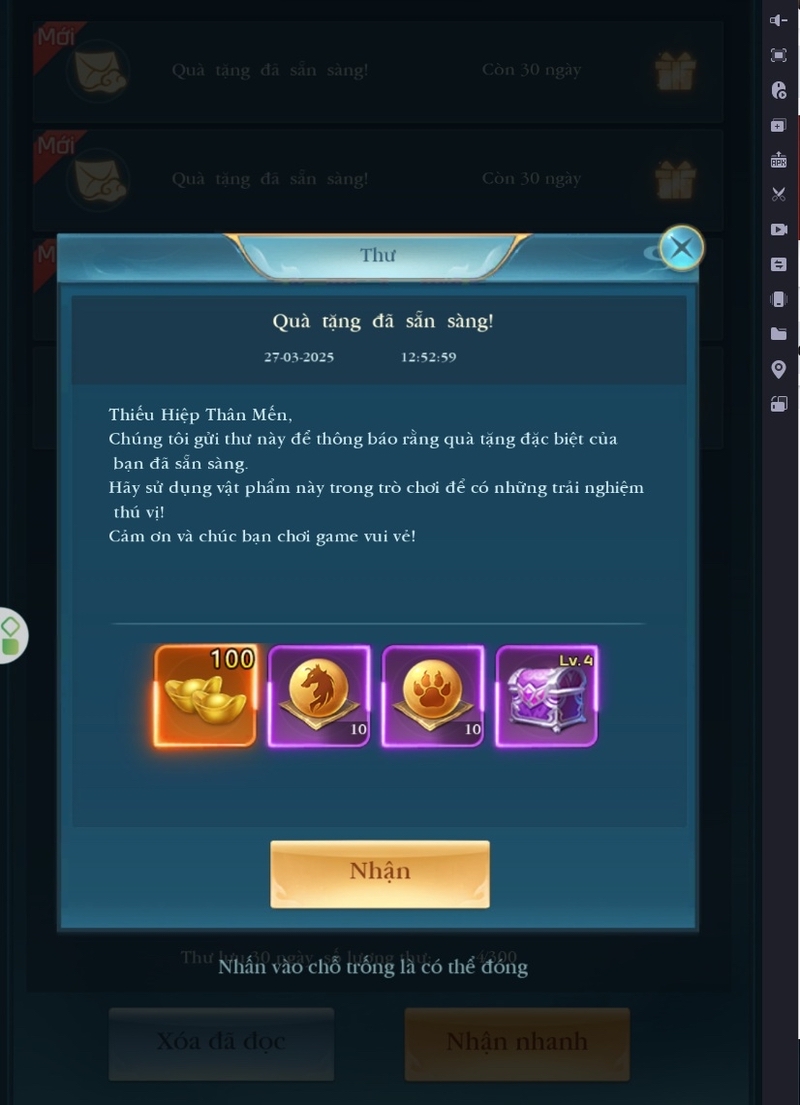
Nhat Kiem Phuc Ma rewards interface illustrates visible rewards for player activity.
Source: FPT Shop.
3. Players Spend for Clear Value
For certain Midcore and Hardcore player segments, spending decisions may be driven by specific, immediately recognizable gameplay benefits.
In the Nhất Kiếm Phục Ma case study, Gamota identified a monetization model built around small purchase bundles offered when players encounter obstacles in character progression.
These purchases provide benefits such as increased power or assistance in overcoming challenges, allowing players to recognize the value of a transaction almost immediately.
However, this behavior does not represent all Vietnamese mobile gamers. Spending motivations vary depending on genre, engagement level, and individual player preferences.
In competitive games, power gains or faster progression may be particularly valuable. Players in other segments may prioritize cosmetics, personalization, or additional content.
The key question for publishers is therefore not only how much players are willing to spend, but also what value they expect to receive in return.
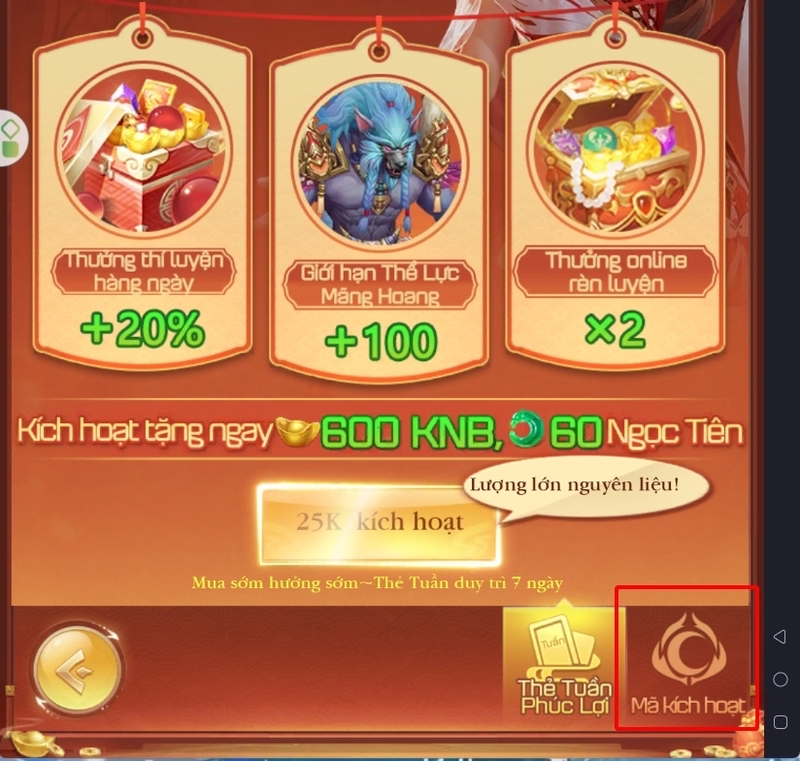
Nhat Kiem Phuc Ma purchase screen explicitly presents the benefits of an offer.
Source: FPT Shop.
4. Players Are Sensitive to Pay-to-Win
Wanting clear value from purchases does not necessarily mean players accept every form of Pay-to-Win (P2W) monetization.
Social Listening analysis in Vietnam Mobile Gaming Year-in-Review 2025 identifies Free-to-Play (F2P), Pay-to-Win, Game Balance, Gacha, and Pity Systems as prominent discussion topics across the gaming communities analyzed.
Players evaluate not only the benefits of purchasing items but also whether those benefits create excessive power gaps or undermine competitive fairness.
Changes to character balance, the Meta, or Gacha mechanics can therefore become sources of community debate, even when they do not directly affect every player.
For publishers, monetization is not simply a matter of payer conversion. It is also closely connected to perceived fairness.
A system may generate short-term revenue while creating negative community reactions if players believe spending advantages diminish the value of skill or accumulated effort.
Pricing, item design, and balance adjustments should therefore be evaluated alongside community feedback rather than revenue performance alone.
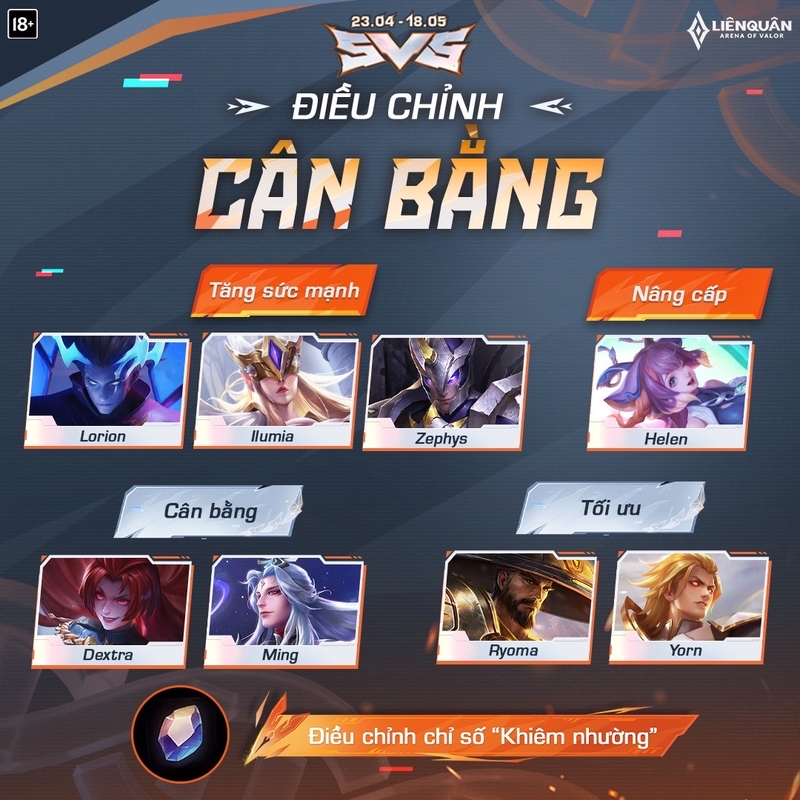
Arena of Valor’s 2025 balance-update graphic
Source: FPT Shop.
5. Retention Motivations Evolve
What motivates players to start a game is not necessarily what keeps them engaged months later.
During the early stages, players may focus on leveling up, unlocking abilities, collecting equipment, or completing challenges.
However, as they reach more advanced progression milestones, character development may no longer be their only motivation. Friendships, guild participation, shared experiences, and established roles within the community can become increasingly important.
This is one of the central themes explored in Gamota’s From Play to Pay: What Builds Long-Term Player Value in Vietnam’s MMORPG Market report.
The research distinguishes between Playing, Staying, and Paying, showing that continued gameplay, long-term attachment, and spending decisions are not necessarily driven by the same factors.
For publishers, this means retention strategies need to evolve throughout the player lifecycle, rather than relying on a single reward system or event structure.
Early progression and achievements may create initial motivation, while social systems, Endgame content, and accumulated player value can become more important for sustaining long-term engagement.
6. Players Evaluate Games Through Communities
One notable insight from Gamota’s Social Listening analysis is the prominence of the question: “Is this game worth playing?”
Players evaluate games not only through advertisements or initial experiences but also through discussions about Endgame content, Meta changes, updates, fairness, and operational quality.
This suggests that gaming communities are spaces where players exchange information and continuously reassess a game’s value.
According to Digital 2025: Vietnam by DataReportal, Vietnam recorded 76.2 million social media user identities in early 2025, creating an environment where online discussions can spread widely. This figure represents social media identities, not unique gamers.
Importantly, server issues, cheating, balance changes, and slow publisher responses also appear among the discussion topics identified in Gamota’s analysis.
For publishers, Community Management is not just about maintaining engagement. It also serves as a feedback channel for improving Product and LiveOps.
However, the prominence of a topic on social media does not mean all players share the same opinion. Community insights should be evaluated alongside operational metrics and actual in-game behavior.
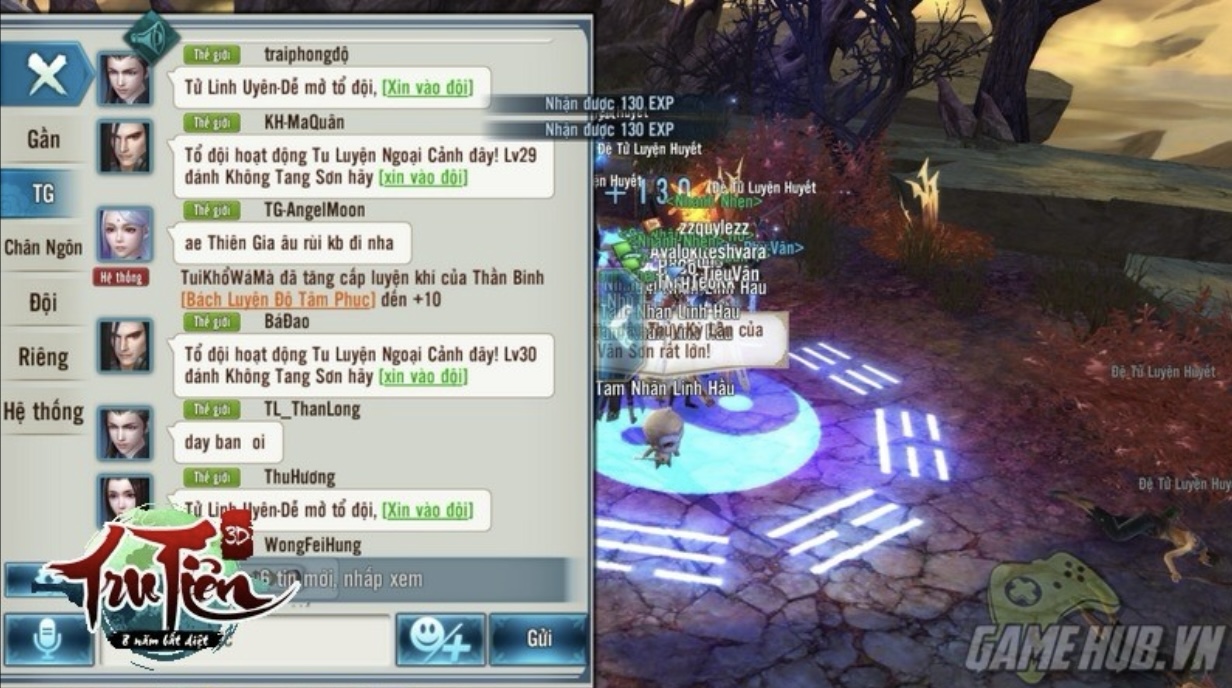
Tru Tien 3D community chat illustrates player-to-player discussion and coordination
Source: Gamota / GameHub.
Understanding Player Behavior for Better Publishing Decisions
Vietnam’s mobile gaming market cannot be evaluated solely through player numbers, download volumes, or genre popularity.
Gamota’s data and case studies highlight important differences between what motivates players to try a game, their expectations for progression, spending decisions, perceptions of fairness, and reasons for staying engaged.
For international studios, understanding these behaviors can support more informed decisions about product selection, gameplay design, monetization strategies, and community operations.
However, player behavior varies across genres and segments. An effective publishing strategy should combine market data, player behavior insights, and product characteristics rather than applying a single formula to every title.
Through market research, operational data, and experience publishing games in Vietnam, Gamota continues to provide insights that help international partners develop more sustainable game publishing strategies and long-term product growth.