

User Acquisition (UA) is one of the most important factors when bringing a mobile game into a new market. In Vietnam, however, UA performance depends on more than budget size or the ability to buy traffic.
Choosing the right channels, building creatives that resonate with local players, tracking the right KPIs and knowing when to scale can make the difference between a campaign that generates installs and one that actually acquires high-quality users.
According to the 2026 Southeast Asia Mobile Game Marketing Report by SocialPeta × Gamota, competition in mobile game advertising across the region continues to intensify, making creative performance, monetization potential and user quality increasingly important parts of a sustainable growth strategy.
Read the 2026 Southeast Asia Mobile Game Marketing Report by SocialPeta × Gamota
For international developers and publishers, the following are some of the key considerations when running mobile game user acquisition in Vietnam.
1. There Is No Single UA Channel That Works for Every Game
Meta, Google Ads, TikTok and mobile ad networks are among the channels commonly used in mobile game UA strategies.
However, the role of each channel can vary depending on the game genre, target audience and stage of launch.
Games with strong visual appeal or gameplay that can be understood within a few seconds may perform well on short-form video platforms. Meanwhile, titles that need more time to communicate character systems, strategy or long-term progression may require a broader mix of creative formats and touchpoints.
Google App Campaigns, for example, can distribute app ads across Google Search, Google Play, YouTube and the Google Display Network, while optimizing toward goals such as installs or in-app actions.
Learn more about Google Ads App Campaigns
Rather than trying to identify a single “best channel,” publishers should build their media mix around the actual performance of each traffic source and user segment.
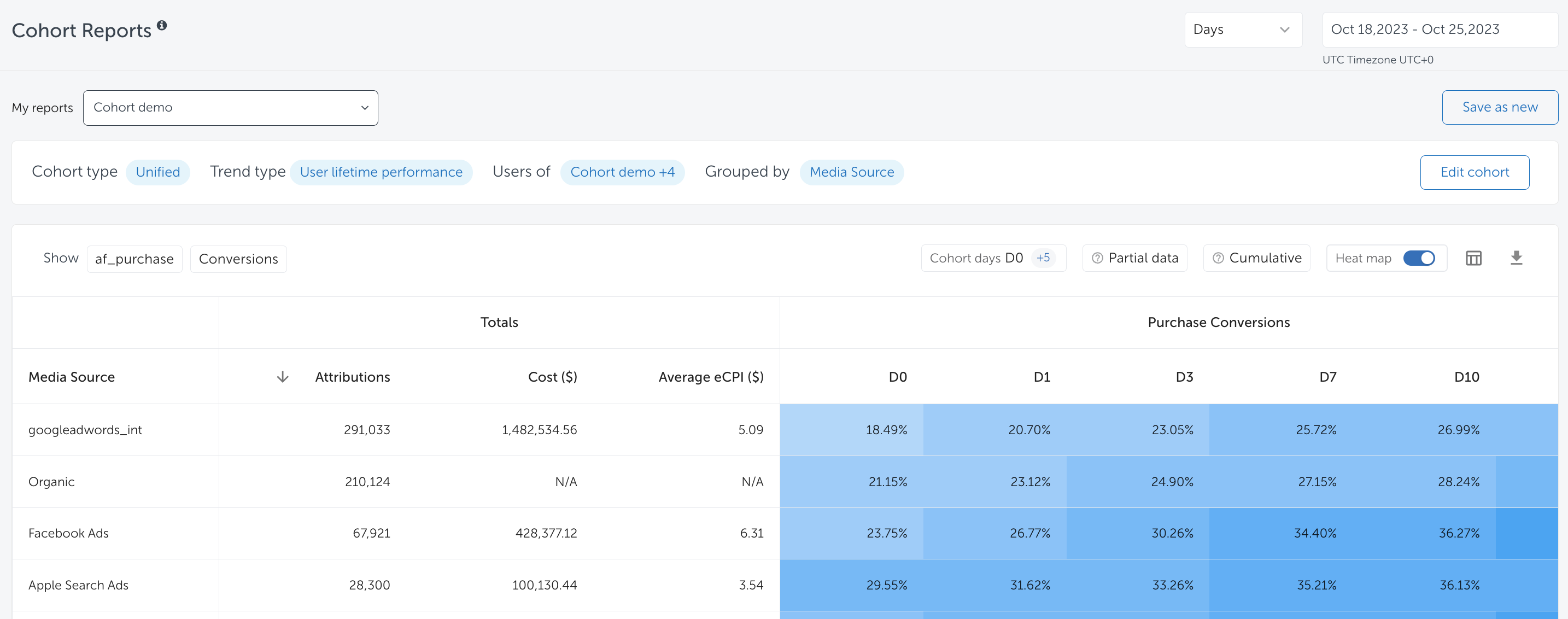
Media Source Performance Comparison on a Sample Dashboard
Source: AppsFlyer.
2. Creative Is About More Than Driving Clicks
In mobile game UA, creative is one of the factors that directly affects the ability to attract users.
Common formats include short gameplay videos, trailers, situational or story-driven creatives, character-focused content, UGC-style videos, static images and playable ads.
The key is for each creative to help users quickly understand what kind of experience the game offers.
A video with a high click-through rate does not necessarily attract the right players if the ad differs too much from the actual in-game experience. In more extreme cases, this can become a form of misleading advertising. Such an approach may generate install volume in the short term, but it does not guarantee strong retention or post-install user quality.
On short-form video platforms, creatives also need to match how users consume content within each placement. Meta, for example, recommends building Reels creatives in vertical video formats and supports A/B testing to evaluate performance.
Read Meta’s guide to Reels Ads
Ultimately, creative performance must be evaluated not only by CTR or install volume, but also by what users do after installing the game.
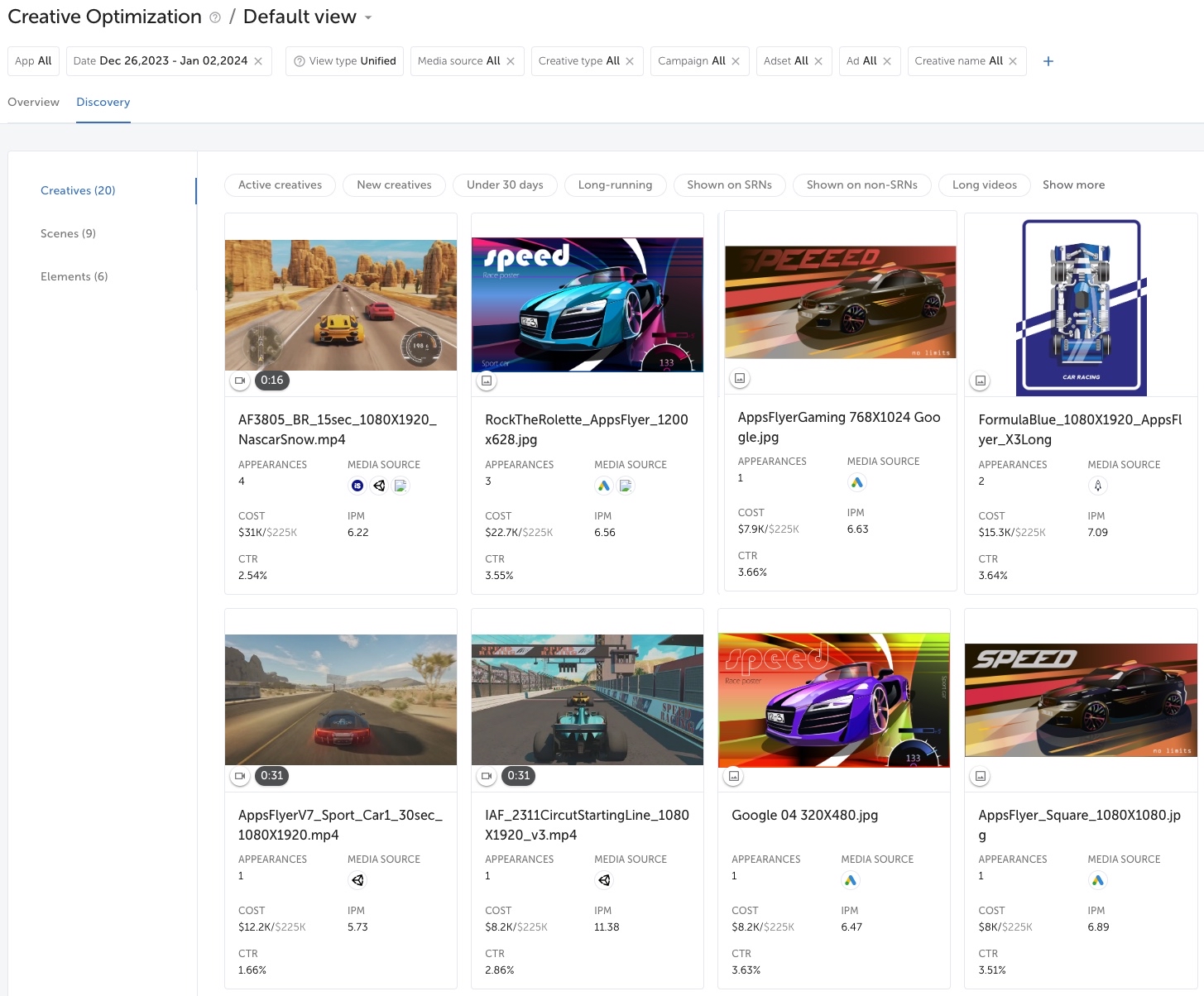
Creative Library with Performance Metrics for Content and Effectiveness Comparison — Illustrative Image
Source: AppsFlyer.
3. Localized Ad Messaging Requires More Than Translation
Localizing an ad is not simply a matter of translating subtitles or voice-over.
The framing of the message, the benefit being emphasized, the use of humor and the call to action can all influence how Vietnamese players respond.
A message that performs well in another market may not generate the same level of interest if local player insights are different.
Instead of simply translating the original creative, UA teams need to answer a more fundamental question: What is most likely to create a strong hook for Vietnamese players when they first see the game?
It may be PvP, characters, rewards, playing with friends, strategic depth, a familiar IP or an experience that feels different from the games they are already playing.
For this reason, creative localization must be treated as part of the UA strategy itself, rather than as a translation step added after the campaign has already been developed.

Vietnamese Messaging and Pre-Registration Offer for Football Arena — Localized Content Example
Source: Gamota.
4. CPI Is Only One Part of the Picture
CPI is often one of the easiest metrics to track in a UA campaign, but a low-cost install does not necessarily mean a high-value player.
An effective measurement framework needs to track multiple layers of KPIs.
At the top of the funnel, teams may look at CTR, install rate and CPI to assess how effectively a campaign attracts users.
After installation, metrics such as Day 1, Day 7 and Day 30 retention help indicate traffic quality and the game’s ability to keep players engaged.
For revenue-focused campaigns, ROAS, payer rate, ARPPU and first-time payer conversion provide a clearer view of the value generated by acquired users.
These metrics need to be read together. A source with a low CPI but weak retention and payer conversion may not outperform a higher-cost traffic source that brings in stronger users.
This also reflects a broader shift in the Vietnam mobile game market from pure scale toward greater emphasis on user quality and monetization.
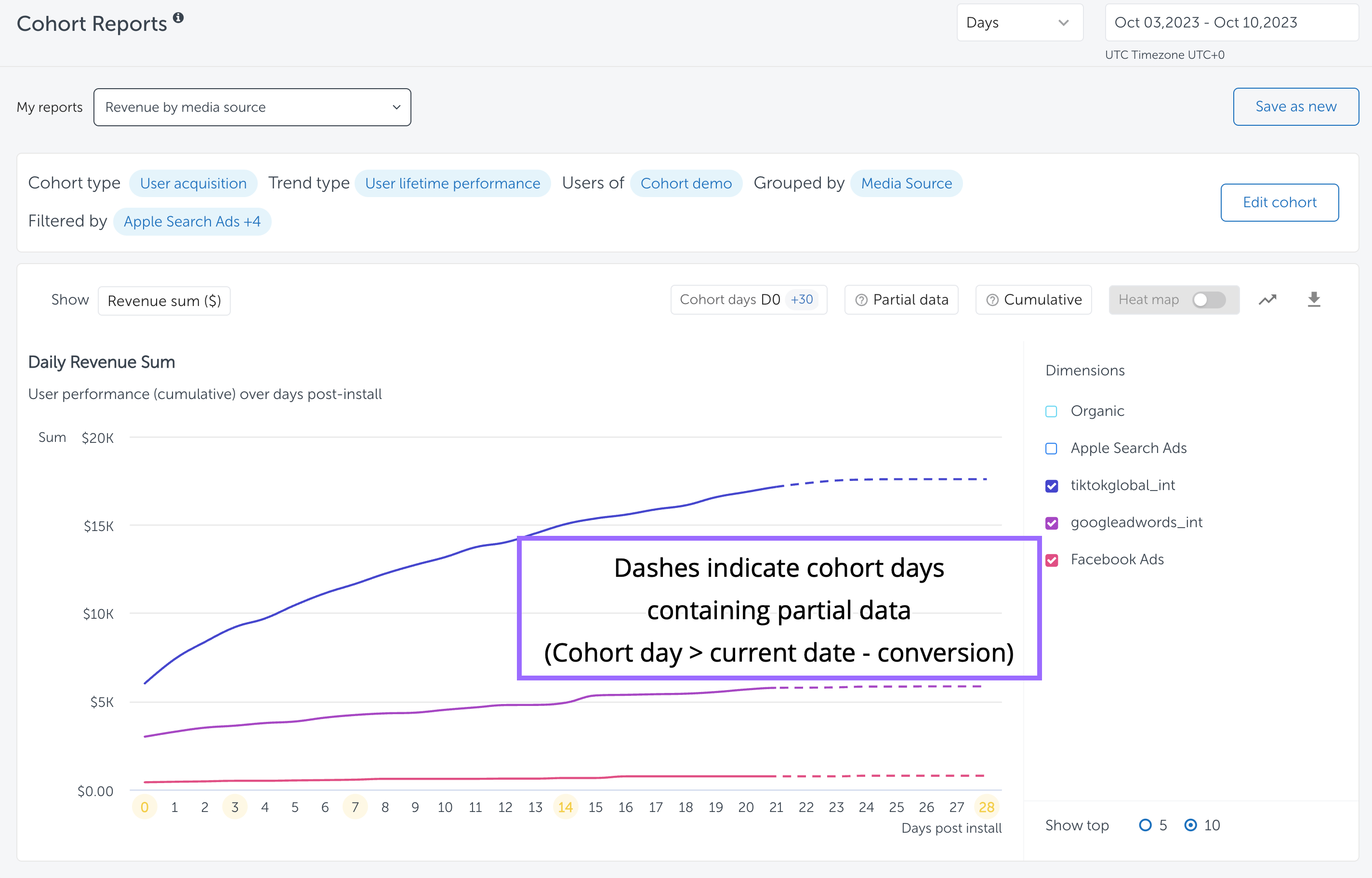
Cohort Dashboard Illustrating How User Value Is Tracked Over Time
Source: AppsFlyer.
Read more in Gamota’s Vietnam Mobile Gaming Year-in-Review 2025
5. Creative Testing Needs a Clear Structure
One common mistake in UA is changing too many variables in the same test.
If the character, hook, gameplay footage, CTA, video length and visual style all change at once, it becomes difficult to identify which factor actually affected performance.
A more effective approach is to start with a specific hypothesis.
For example, the same gameplay footage can be tested with several different opening hooks. Or the same message can be presented through different video formats to determine which execution works best.
Once the strongest elements have been identified, teams can combine them to develop new creative variations.
Creative testing should also continue after a high-performing ad has been found. As campaigns run longer or scale to larger audiences, creative fatigue can reduce performance when the same users are repeatedly exposed to similar content.
6. Scaling Too Quickly Can Reduce Traffic Quality
A campaign that performs well at a small budget does not necessarily maintain the same efficiency once spending increases significantly.
As campaigns scale, ad delivery systems may need to reach broader user groups with lower levels of relevance. CPI, retention, payer rate and ROAS can all shift as a result.
The decision to scale should not be based solely on a campaign having a strong CPI.
UA teams need to monitor cohort quality, retention, payer metrics and revenue performance together before increasing budgets.
Scaling gradually also gives teams more time to observe changes in the traffic mix and determine whether current performance can be maintained at a larger scale.
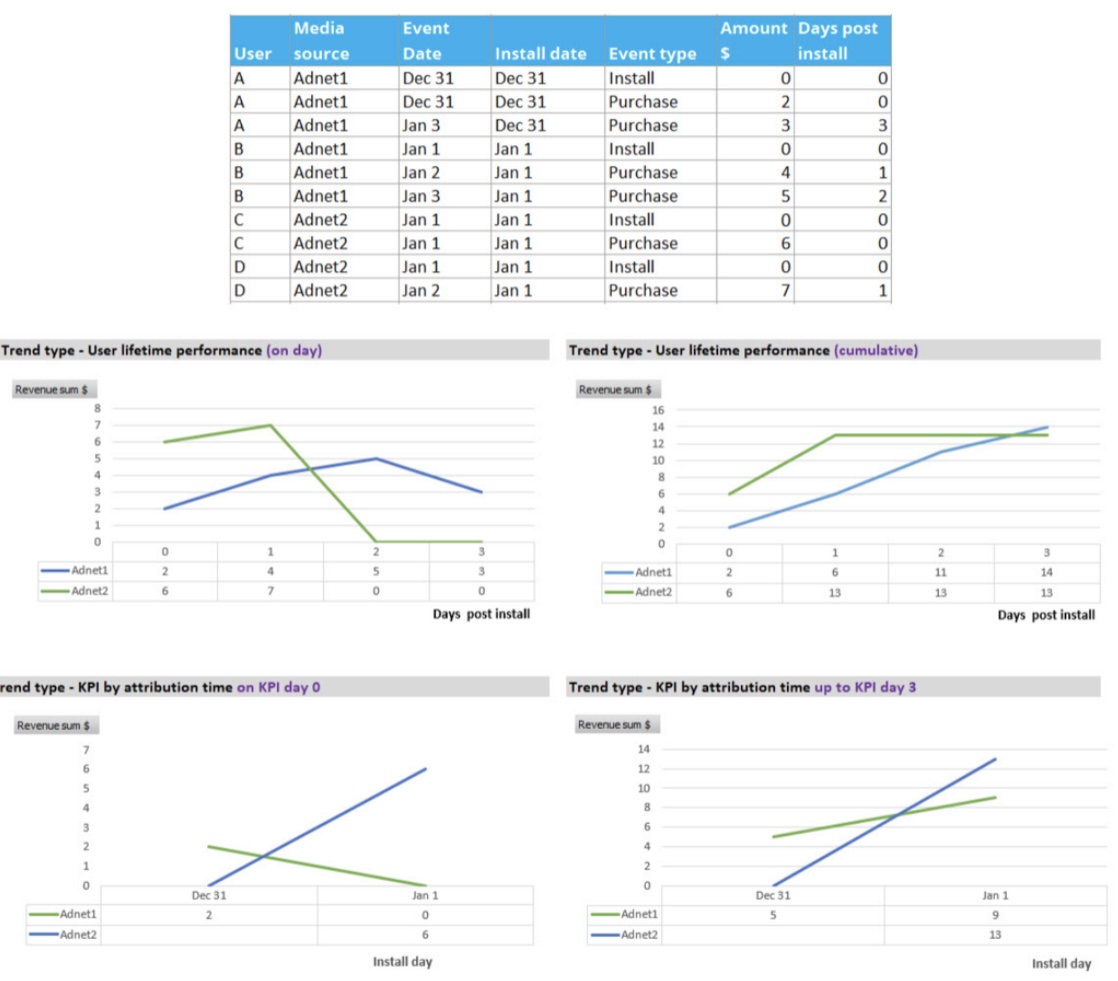
Example of Cohort Comparison by User Acquisition Period; Illustrative Data
Source: AppsFlyer.
7. UA Needs to Be Connected With Product and LiveOps
User Acquisition cannot operate independently from the rest of the game.
If onboarding is not strong enough, new users may leave before they fully understand the core loop, even when creative and targeting are performing well.
If LiveOps lacks depth, retention may decline after the initial period.
If offers or the monetization system are not well designed, high install volume may still fail to translate into revenue.
As a result, UA data should feed back into product, operations and monetization teams. High-quality cohorts, strong-performing creatives and user groups with better payer rates can all provide useful insights for future product decisions.
Effective UA Is About More Than Acquiring More Users
In Vietnam, a mobile game UA campaign should not be evaluated only by install volume or CPI.
Real performance comes from acquiring the right players, keeping them engaged and creating long-term value for the product.
That requires close alignment between channel strategy, creative, localization, measurement and scaling.
With experience in publishing and operating games in Vietnam, Gamota supports international developers and publishers across multiple stages of UA, from market research and media strategy to localized creatives, campaign optimization and post-install user quality analysis.
For companies preparing to launch a mobile game in Vietnam, building the right UA strategy from the beginning can help reduce scaling risks and create a stronger foundation for long-term growth.