
In October 2025, Dan Moskowitz from Third Point Ventures published an in-depth analysis on the impact of AI across game development tooling and media production.
The article approached the topic by looking at the economic impact of AI across different categories of game development, while also analyzing how budgets are allocated across stages such as Concept, Pre-Production, Production, QA/Playtesting and Launch. From there, it identified where AI could generate the highest cost savings.
Nearly seven months later, the picture has become clearer. There has not been a single breakthrough that has overturned the entire games industry. However, the differences between groups of tools are now easier to see: some have started entering production workflows, some remain largely experimental, and some have yet to find a sustainable product direction.
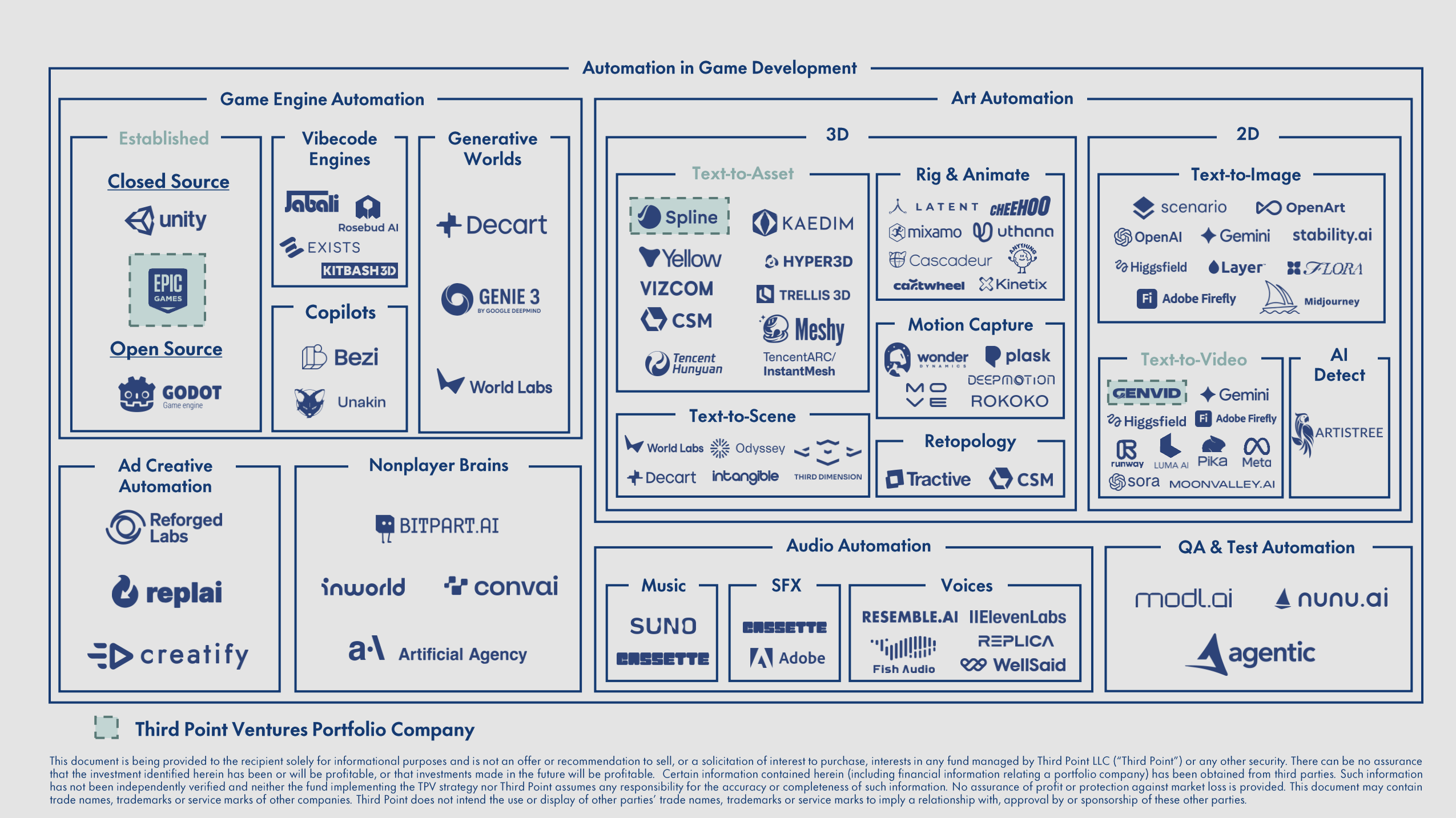
AI game tooling landscape by Third Point Ventures, October 2025.
Source: Third Point Ventures
Why AI Cannot Replace Game Engines in the Near Term
Moskowitz’s core argument is not that “AI will replace humans in making games.” Rather, AI can help studios save time and cost in parts of production that are traditionally resource-intensive.
In the near term, the areas with the clearest potential for efficiency gains include:
- Art & Animation, which typically accounts for around 10–30% of production budgets.
- QA/Playtesting, which accounts for around 10–20% of budgets.
- Audio, which accounts for around 10%; within this category, dubbing and localization are among the notable near-term applications of AI voice.
By contrast, more ambitious directions such as fully AI-generated game worlds, or a new generation of AI-native game engines, remain long-term opportunities. The reason is that these technologies still face major barriers around operating costs, control and production stability [1].
Third Point also used a simple calculation to show why traditional game engines are unlikely to be replaced in the near term. If a 20-hour AAA game were created entirely using an AI-generated game world technology such as Genie 3, the system would need to generate millions of new frames for each player.
Operating costs could reach tens of thousands of dollars per playthrough, while a AAA game typically sells for around $70. Therefore, the more realistic direction over the next few years is not “AI replacing game engines,” but AI being integrated into Unity, Unreal or existing workflows to accelerate certain parts of production [1].
Game Engines Are Not Disappearing, But the Ecosystem Around Them Is Changing
One of Third Point’s strongest arguments is that Unity and Unreal will not be easy to replace [1]. As of May 2026, this still holds true. What is more notable is that the development ecosystem around major engines is showing signs of change.
Unity has opened the Unity AI public beta to all developers using Unity 6 and above [3]. Unity AI is currently introduced by Unity with features such as AI Assistant, AI Gateway and MCP Server. AI Assistant supports developers directly inside the Unity Editor, AI Gateway helps connect external AI tools into the workflow, while MCP Server allows developers to work with Unity from familiar IDEs or AI applications [2]. At the same time, in the Unity 6.2 roadmap, Unity also introduces Inference Engine to replace Sentis, allowing AI models to run in the Editor or at runtime [4].
On the Unreal side, the more notable changes are happening in the production ecosystem, such as MetaHuman, rather than through an AI assistant similar to Unity’s. MetaHuman 5.6 has left Early Access and expanded licensing to support use with other software such as Unity, Godot, Maya and Blender [5], giving studios more flexibility in choosing tools without being limited to the Unreal ecosystem.
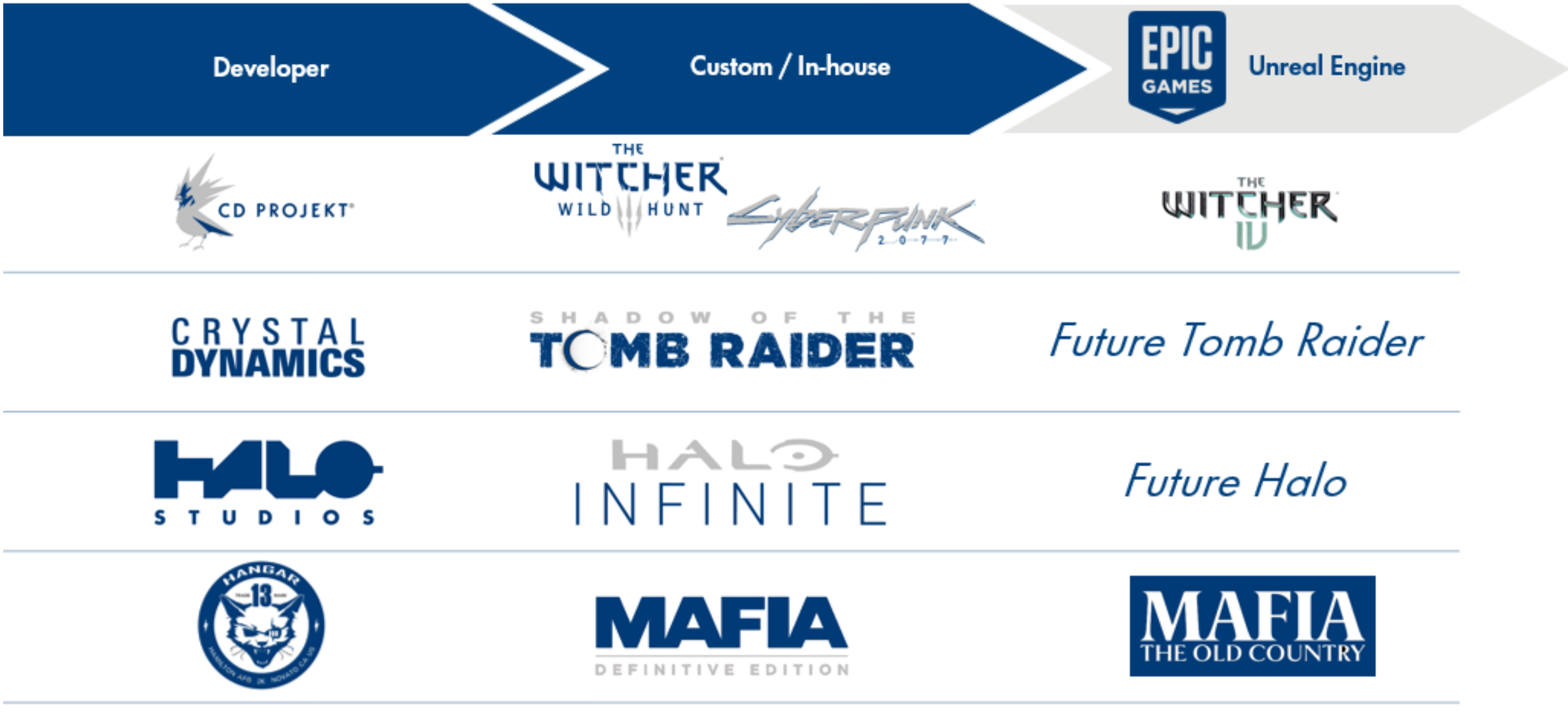 Examples of major studios and franchises moving from custom/in-house engines to Unreal Engine.
Source: Third Point Ventures
The point to watch is that as major engines and their surrounding production ecosystems bring AI or automation tools deeper into the workflow, third-party copilot tools may need to prove more differentiated value, rather than remaining general-purpose assistants for developers.
AI-Generated Game Worlds: Potential and Barriers
Third Point previously mentioned Genie, World Labs and Decart as long-term directions. By 2026, the gap between experimental versions and real production workflows remains clear, even as more signals have emerged.
Google has opened Project Genie to a group of Google AI Ultra users in the United States, allowing them to create and explore interactive worlds from text and images [6]. However, Google still positions this as an early research prototype, with limitations around consistency and character control.
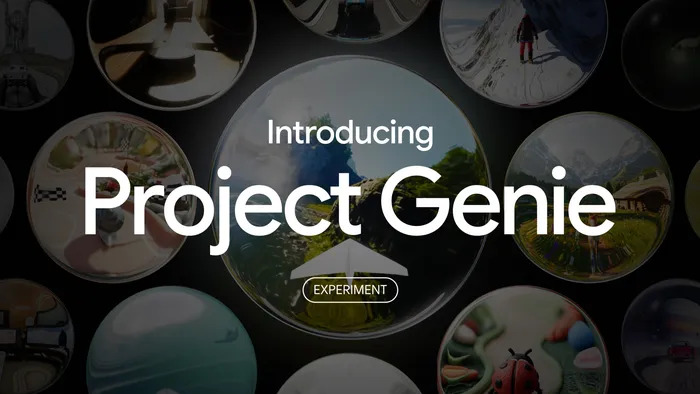
Project Genie, an experimental AI world model for interactive worlds
Source: Google Blog.
Microsoft introduced Muse, a World and Human Action Model. In simple terms, this model learns both game visuals and player controller actions, allowing it to generate new gameplay sequences [7]. Microsoft and Xbox position Muse as a tool for gameplay ideation and game preservation, not as a replacement for game engines in production.
Microsoft Muse is introduced as a generative AI model designed for gameplay ideation.
Source: Microsoft Research.
Google DeepMind introduced SIMA 2, an AI agent powered by Gemini that can understand natural-language-like instructions and act autonomously in 3D environments [8]. This is relevant to several problems that many studios are exploring at the same time: QA automation, non-player character behavior and player simulation.
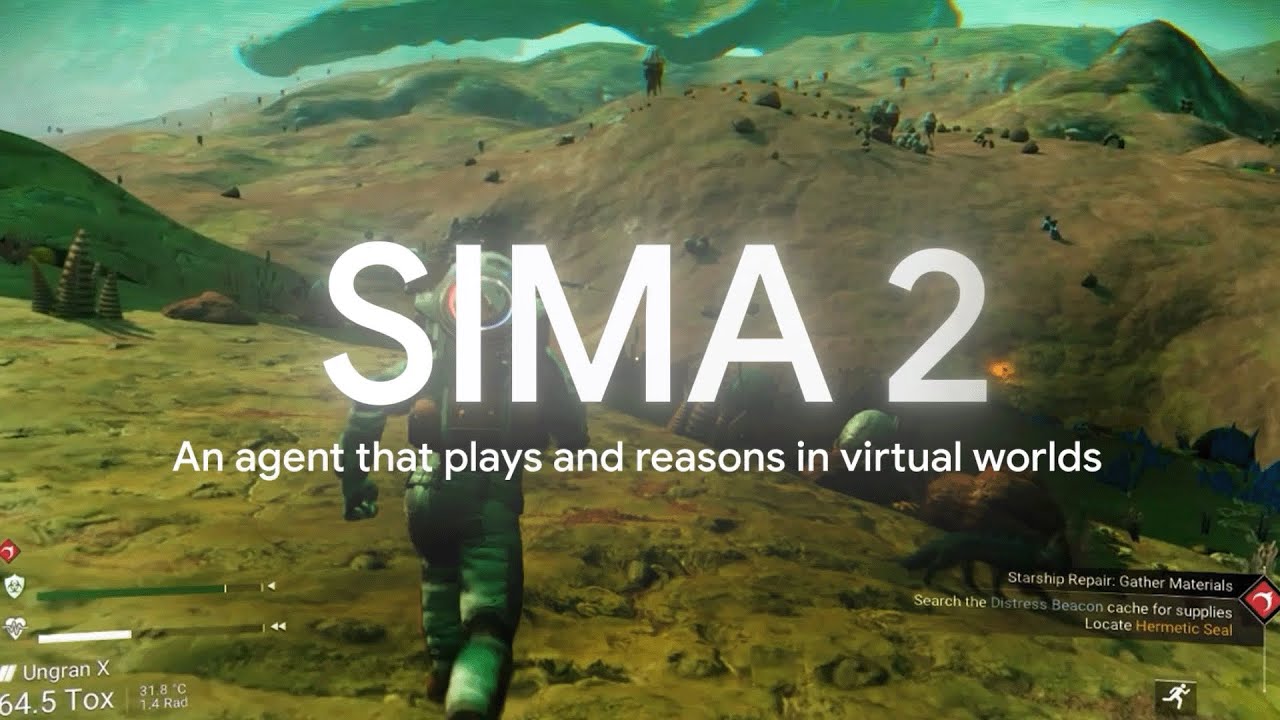
SIMA 2 is a Gemini-powered AI agent designed to play, reason and act in 3D virtual worlds.
Source: Google DeepMind.
The barriers identified by Third Point have not yet been solved: operating costs remain high, fine-grained control is still limited, and consistency across worlds, characters and game rules remains a major challenge. Therefore, in 2026, AI-generated game worlds are better viewed as a long-term research direction than as a production-ready game development workflow.
3D Assets: From Looking Good to Working in Engine
One of the most notable areas of change since late 2025 has been AI-generated 3D assets.
Third Point pointed out the core limitation of text-to-3D: topology, meaning the polygonal structure beneath the surface, is often too poor for rigging and animation in real production pipelines [1]. A model may look good in a preview, but if the mesh is too messy, joints deform incorrectly or the geometry is not watertight, the asset is still difficult to bring into an animation pipeline.
By 2026, many tools are moving toward this problem.
Tripo AI announced a $50 million funding round and a new set of models, claiming to target production-ready 3D generation for games, from sketches to 3D assets with clean geometry and animation-ready rigs [9].
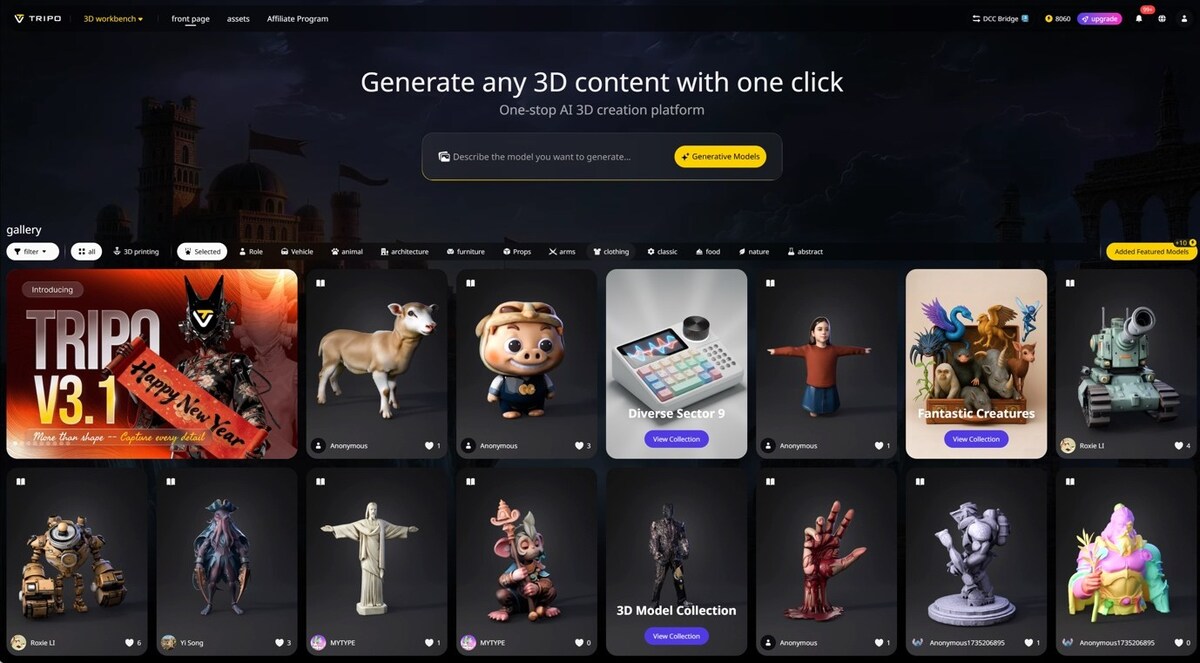
Tripo AI’s 3D generation platform for creating game-ready assets.
Source: PR Newswire / Tripo AI.
Meshy has updated features such as smart remeshing, auto-rigging, UV mapping and exports in multiple common file formats [10].
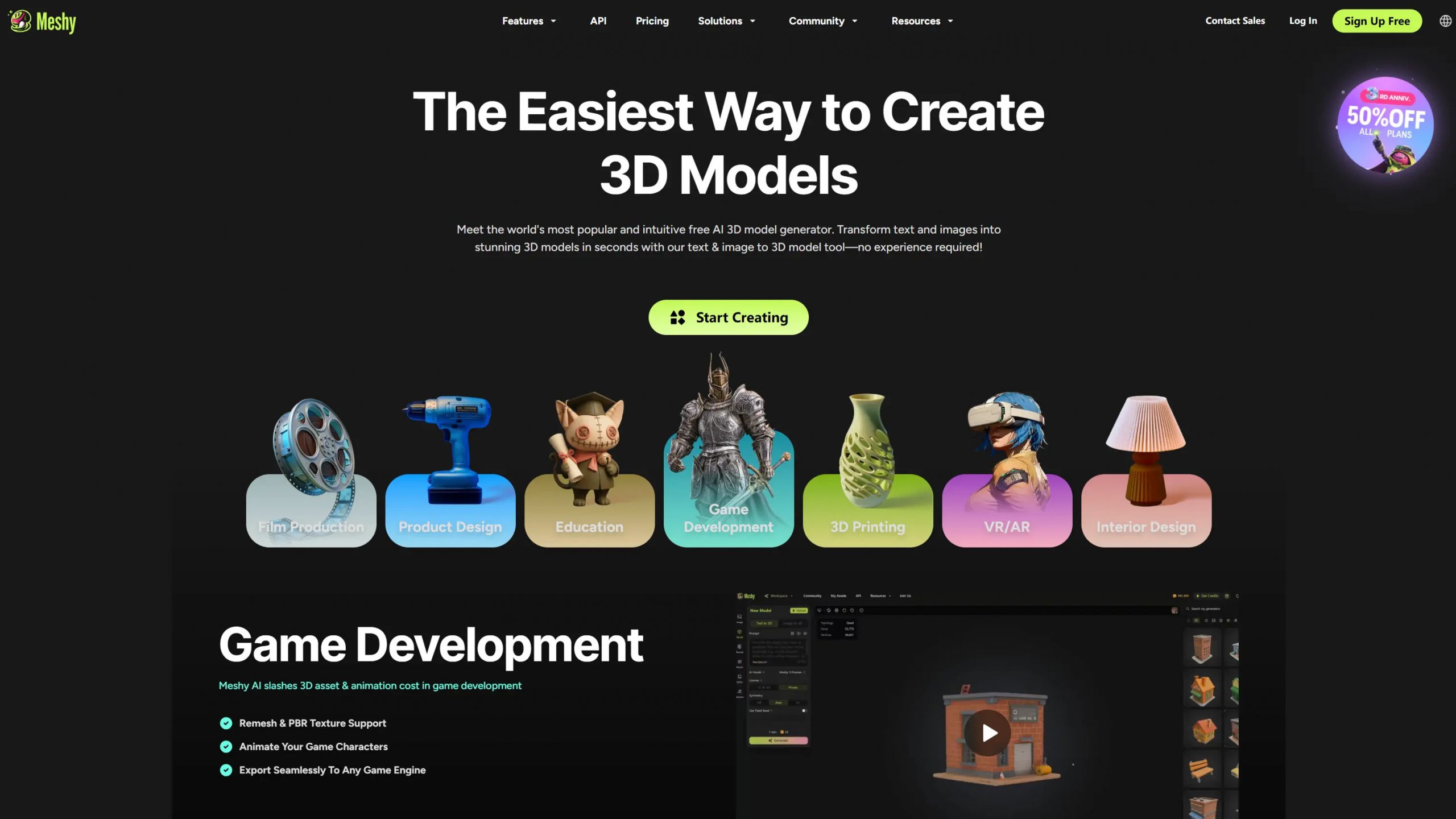
Meshy’s AI 3D asset workflow for game development.
Source: Meshy.
Tencent has also expanded its Hunyuan3D toolkit with open-source models capable of converting text and images into 3D visuals, targeting designers and game developers [11].

Tencent Hunyuan 3D Global for text-to-3D and image-to-3D creation.
Source: Tencent.
Kaedim continues to follow a human-in-the-loop approach, where the AI model creates a rough version and human artists refine the topology before delivery, aligning with the outsourcing workflow used by large studios [12].
It is worth noting that much of the current information still comes from product announcements by the companies themselves, so these should be viewed as market signals rather than proof that the 3D production-ready problem has been fully solved. Still, the direction is clear: the question for 3D AI tools is no longer simply “Can AI create a 3D model?” but “Is the mesh clean enough for rigging, can it be exported into Unity or Unreal, and can it shorten the time from sketch to usable asset?”
Overall, the first part of the AI game tooling landscape shows one thing quite clearly: ambitious technologies such as AI-generated game worlds or next-generation engines remain far from production, while tools directly tied to existing workflows, such as Unity AI, MetaHuman and AI-generated 3D assets, are moving closer to studios’ practical needs.
In Part 2, the article will continue with areas that have a more direct impact on content production and post-production operations: Video AI, QA automation, AI voice and NPCs.
For more insights on Vietnam’s game industry, publishing trends and game market updates, visit Gamota:
https://gamota.com/
References
[1] Third Point Ventures, “AI Impact on Gaming and Media Tooling,” Dan Moskowitz, October 2025.
https://www.thirdpointventures.com/currents/AI-impact-on-gaming-and-media-tooling/
[2] Unity, “Unity AI.”
https://unity.com/features/ai
[3] Unity Discussions, “Unity AI’s Open Beta now live for Unity 6,” May 2026.
https://discussions.unity.com/t/unity-ai-s-open-beta-now-live-for-unity-6/1718560
[4] Unity Discussions, “Unity 6.2 Beta is now available.”
https://discussions.unity.com/t/unity-6-2-beta-is-now-available/1639999
[5] Unreal Engine, “All the big news and announcements from the State of Unreal 2025.”
https://www.unrealengine.com/news/all-the-big-news-and-announcements-from-the-state-of-unreal-2025
[6] Google Blog, “Project Genie: Experimenting with infinite, interactive worlds.”
https://blog.google/innovation-and-ai/models-and-research/google-deepmind/project-genie/
[7] Microsoft Research, “Introducing Muse: Our first generative AI model designed for gameplay ideation.”
https://www.microsoft.com/en-us/research/blog/introducing-muse-our-first-generative-ai-model-designed-for-gameplay-ideation/
[8] Google DeepMind, “SIMA 2: A Gemini-Powered AI Agent for 3D Virtual Worlds.”
https://deepmind.google/blog/sima-2-an-agent-that-plays-reasons-and-learns-with-you-in-virtual-3d-worlds/
[9] PR Newswire, “Tripo AI Announces $50 Million in Funding and New Models for Production-Ready 3D Generation.”
https://www.prnewswire.com/news-releases/tripo-ai-announces-50-million-in-funding-and-new-models-for-production-ready-3d-generation-302724894.html
[10] Meshy, “Best AI Tools for 3D Game Assets.”
[11] Reuters, “Tencent expands AI push with open-source 3D generation tools.”
https://www.reuters.com/technology/artificial-intelligence/tencent-expands-ai-push-with-open-source-3d-generation-tools-2025-03-18/
[12] Kaedim.
https://kaedim3d.com/