

New Policies Are Reshaping the Market
Vietnam’s gaming industry is entering a new era, one defined not just by tighter regulation, but by a clearer, more ambitious development vision.
The focus has shifted from content control alone toward building a legal, transparent market with sustainable long-term growth.
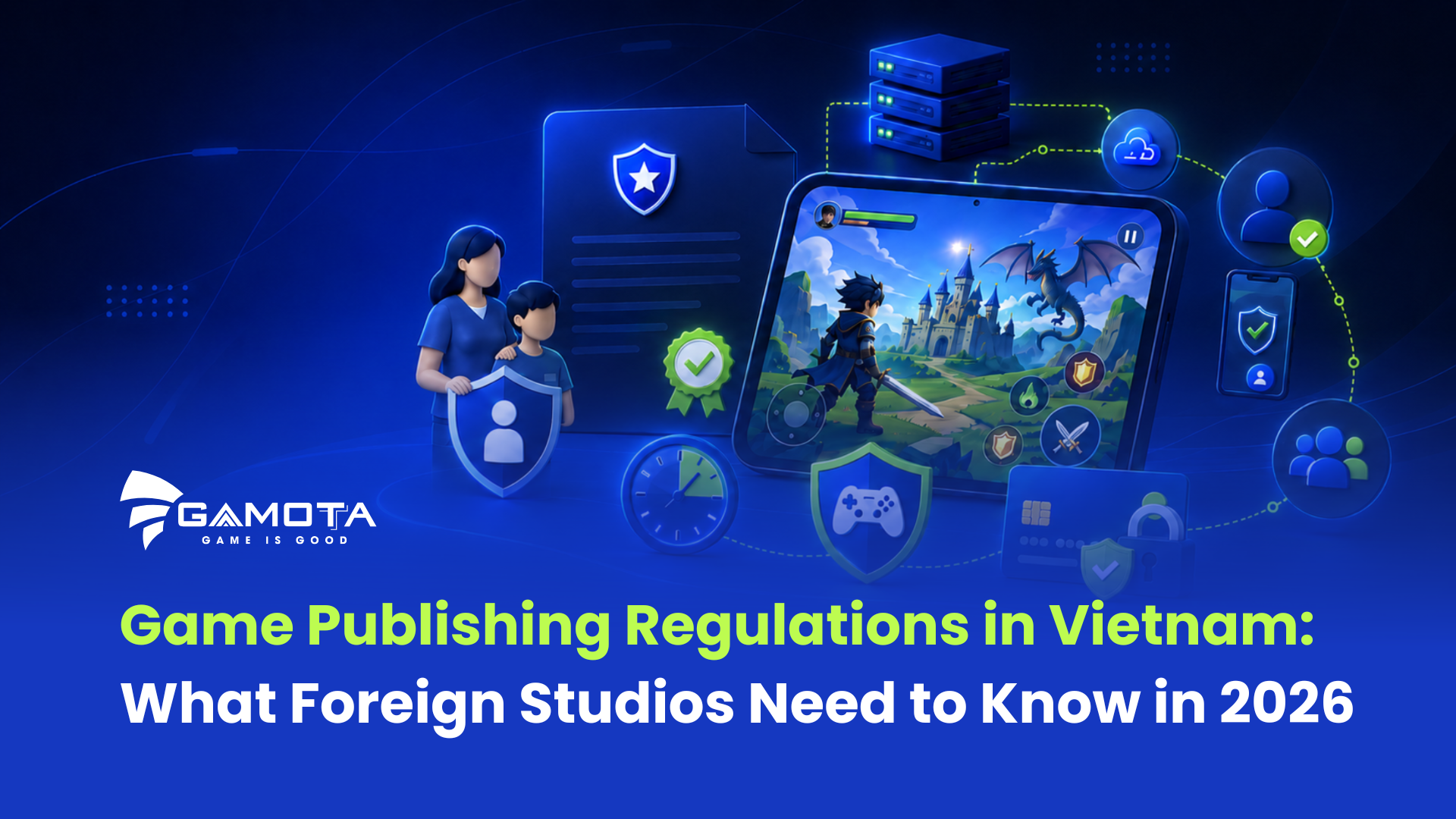
The most significant regulatory change is Decree 147/2024/ND-CP.
Under the new rules, players must verify accounts using Vietnamese phone numbers, screen time limits apply to users under 18, unauthorized cross-border app stores are blocked, unlicensed games must be removed, and foreign entities are required to establish a legal presence in Vietnam.
For businesses operating within the law, this is a welcome reset. As pirated games, unlicensed titles, and unregulated cross-border services face stricter enforcement, compliant operators gain a fairer competitive landscape. The policy is as much about restoring market order as it is about regulation.
A National Vision Beyond Licensing
What makes the current moment distinctive is that the conversation has moved well beyond legal compliance.
Covered by VTV across multiple industry forums, games are now being discussed as part of a broader national agenda: growing the digital content industry, exporting creative IP, and amplifying Vietnamese cultural identity on the world stage.
Vietnam GameVerse 2025 was positioned as a connective platform, bridging regulators, publishers, developers, investors, and universities, and explicitly tying the growth of gaming to the promotion of Vietnamese culture.
This direction became even more concrete in February 2026, when the Government announced an intensive program to train 5,000 specialists in developing history-focused educational games, under the action plan implementing Resolutions 79 and 80.
Alongside legal reform, building a high-quality talent pipeline was identified as a core strategic pillar.
The signal is clear: games are no longer viewed simply as entertainment. They are now recognized as a modern content medium capable of telling historical stories, transmitting cultural values, and engaging younger generations in ways traditional formats cannot.
Publishers as the Critical Link
As this new framework takes shape, publishers are emerging as the decisive factor in turning policy into practice.
According to VTV, the publisher’s role today extends well beyond importing and distributing titles. Publishers are now active participants in operations, localization, community management, communications, and ultimately in shaping how Vietnamese audiences receive and connect with a product.
This is precisely where culture enters the game, not through broad themes alone, but through the fine-grained work of translation, item naming, dialogue adaptation, and community storytelling tailored to local sensibilities.
Mechanical translation produces games that feel foreign and fail to retain players. Thoughtful, deep localization builds lasting engagement.
Gamota: A Practical Demonstration
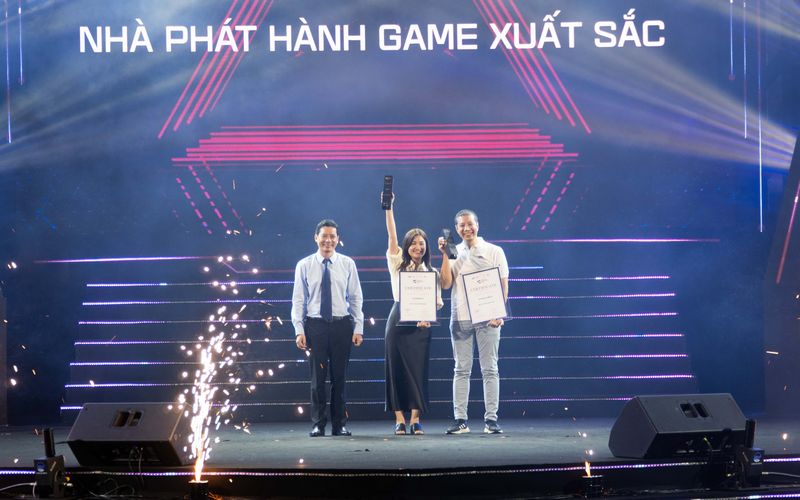
In the VTV1 feature “Vietnamese Culture as Inspiration for Online Games,” Gamota was highlighted not only for its localization capabilities, but for its broader ambition to use games as a storytelling medium for Vietnamese culture and history.
That capability has already produced measurable results. With the title Tieu Ngao, Gamota’s comprehensive refinement, covering everything from interface design to dialogue, drove a 10-15% improvement in player retention and a 40% increase in user lifetime value.

Speaking in the feature, Gamota representative Vu Thi Trang articulated a tension that defines the company’s mission: Vietnam possesses an extraordinarily rich repository of legends, historical narratives, and cultural material, yet these stories have largely remained within the country’s borders, lacking the international reach of the world’s major mythological traditions. For Gamota, that gap represents both a challenge and an opportunity to retell Vietnamese stories in a modern, dynamic language that can travel.
Conclusion
The current state of Vietnam’s gaming industry can be understood through three converging forces. The Government is establishing a cleaner, more transparent market through regulatory reform. National policy has expanded to encompass talent development and the integration of history and culture into games. And publishers are the actors responsible for translating both into real products that resonate with players.
Ultimately, bringing culture into the world of games is not a matter of ambition or slogans. It requires clear policy, skilled talent, and publishers with the market knowledge to tell Vietnamese stories in a language gamers are ready to embrace. Gamota’s trajectory offers one of the clearest examples of what that looks like in practice.
References
- Government News Portal. New provisions on the management, provision, and use of Internet services and online information. 28 November 2024.
- VTV.vn. Vietnam emerges as a new global destination in gaming. 27 May 2025.
- VnExpress. Vietnam to train 5,000 developers for history-based educational video games. 25 February 2026.
- VTV.vn. What is driving the strong breakthrough of Vietnam’s gaming industry? 27 May 2025.
- VTV1. Feature report: Vietnamese culture becomes an inspiration for online games.